Saturday, March 2, 2019


Why I use Circle versus circle to describe the process?

While those whom I adopted the term circle from refer to it with a little ‘c’ – I identify the process with a capital letter, Circle. I do this to highlight its exceptionalism as one would give a person a title, an honored distinction. I also do this because over the years researching this transformative process (including for a Master of Arts), I came to know Circle as an entity, an actual life-form, an energy complete unto itself. Take for instance Circle present in the natural world. It is the rain drop in the puddle rippling outward, it is the dandelion blooming and expanding outward, it is the planets orbiting, it is the weather currents, the ocean tides, the moon cycles and seasons, it is life growing, it is life itself. This perception of Circle has had an extraordinary impact on me and influenced my interest in advocating Circle for Environmental Education purposes.


Saturday, November 24, 2018

Inspiration Behind my Business Name, The Bumblebee Circle


What is the inspiration behind the company name, The Bumblebee Circle, and what it encompasses?

It is my observation that we are “bumbling builders” learning how to “bee” in a time of ecological (and social) crisis & uncertainty – in need of a means to change the way we are being, to a more community way of being, for the health & wellness of all bee-ings.

We can learn from the bumblebee that is often mistaken as a solitary bee because it works alone. But alike the honeybee, bumbles are honey producing social bees that live in colonies. They make wax comb where they congregate, store honey, and raise their young. They are foragers and ‘storagers’ of nectar and pollen; and are genetically programmed to gather food sources for colony health and survival. Bumblebees, however, live shorter life spans and have significantly smaller colonies which die off annually.

I have often wondered if how honeybees and bumblebees differ in their ability to survive has everything to do with the honeybee’s extraordinary communication which has a direct relationship to the way they work. Unique to the honeybee species is a means of communication, the waggle dance, that allows them to work in collaboration in their foraging efforts. The waggle dance even communicates the distance and direction to the food sources as well as its quality! So we see thousands (upon thousands) of honeybees on a flower patch versus the one (or handful) of bumbles.
When effective communication and collaboration is overlooked in the relationships we have with each other, we can bumble along in the work we do. I wonder if what we seek to become (as more sustainable and healthier in the way we are being) is in fact what honeybees have been doing all along. So then, just as the honeybee has the waggle dance for collaboration efforts, we have Circle as a way to become a more collaborative working together for the health & well-being of all.

We can continue to learn more from the hard-working bumblebee that will work spring to fall, the extent of the growing season, even in inhospitable conditions to get its work done. There is the Artic bumblebee known to work until it dies of exhaustion! For us bumbling builders (e.g. those working towards environmental & social well-being), there is always more work to be done and at times the work seems endless. Some of us respond to this by working harder. Such extremes can cause exhaustion, burn out and the failings of one’s health.

One does not need to work overtime to feel the weight of the work. The work itself can be disheartening. With every mouth we feed, another will go hungry. With every person who obtains liberty, another will suffer. With every tree we save, another is cut down. And still, one does not even need be busy with this work to experience disheartenment. We are bombarded with images and news stories of ecological degradation and loss, social injustices and horrors, and the like. One need only to scroll through one’s facebook feed, flip open a newspaper, or turn on the TV to witness countless insults and injuries against the natural world and the beings that live in it.
When our hearts are heavy with the work we do or with what we witness – we can turn to Circle as a way to restore, recharge and sustain us. Like honey and honeycomb sustain the bee’s way of being, Circle is an extraordinary tool to nourish us bumbling builders. It provides a way for us to give voice to the things that matter most to us about the planet, and space & time to address the emotionality that can arise from the work and what we witness. In Circle we are invited to be listened to, seen and witnessed in our wholeness – and this can have a healing and transformative impact on us. Ultimately it comes down to this:

We need to take care of ourselves and each other, and everything that we need to ‘take care of us’ – ourselves, others and the world around us – already lies within us. Circle can help us to discover this. When we take good care of ourselves, we are able to take better care of others and together move to take the upmost care of the natural world around us and all beings that live within it.

So then, in summary, The Bumblebee Circle simply encompasses this: A means for bumbling builders (a.k.a. the human race), to change the way we are being, to a more community way of being, where we can take better care of all.

Monday, January 27, 2014

Circles for Self Awareness Advancement


Bee Happy from the Inside Out

The bees were out the other day. The weather was warm enough.
Today's a little too cold out there for bees to be out and about.

I wonder what that's like for them. To be frolicking in flight sipping the sweets of nature one day, and the next being held captive inside from an inhospitable environment.

How do we experience the same? Do we feel on top of the world when things go well in our life, and then turn inwards, feel insecure and out of sync when things do not? Is our way of bee-ing affected so much by the environment around us?  Possible. Maybe a little for some, and too much for others. Sometimes I too can forget my umbrella of self-awareness that shields out the rain.

If the environment (what happens on the outside of who we are), changes so much around us, why make 'happiness' reliant on it?  Is it not better to pivot around one's center of self-awareness, that sense of self that is connected to the source?

I don't believe the weather puts a halt on the work that bees need to get done for colony sustainability and well-being. There's cells to clean, honey to cap, brood to nurse and other to keep busy at on an 'indoor day'.

So here is what I propose: On the days where the world around us seems to be caught in a storm - look at them as "indoor play dates". Kinda like indoor recesses and lunches play time - once upon an elementary school time.... We can look at those inhospitable days as a 'play date with self', that is, a time of self-reflection, creativity, and self-awareness advancement - so that we can maintain that high frequency humming buzz within always enjoying the 'nectar' and sweetness of life.


Here's one way to practice an 'indoor me day':

MAKE A MANDALA.

And here's one way how-to:

1.  Create a ‘contained space’ in which you will communicate from the heart through creative artwork.  Find a piece of paper or another kind of blank canvass on which you will draw, trace or cut out a Circle - in which you will create your Mandala masterpiece.
2.  Choose your medium of choice. It doesn’t matter what you use to draw/paint with – go with whatever you feel like – this may change from creation to creation. Mix it up. Be color coordinated or chaotic – use one or a variety of mediums - it doesn’t matter.
3.  Let whatever surfaces manifest in art form. When you speak from the heart you are not thinking from the head – nor should you critic or judge what you are creating – it is what it is. Go with the flow, trust in what surfaces, allow it to manifest in creative form, don’t judge the finished product.
4.  Learn from the process. Learning is not so much from creating a finished product, rather it is in the process of creating itself, the thoughts and feelings that move through you as you create. Also, you may have no idea what it is your heart is saying until you reflect more deeply on the process, and on what you created.
5.  Believe that Mandalas are all about heart.  Some people think that Mandalas should be symmetrical in design, with repeated shapes & colors throughout the circumference of the art form to be considered a Mandala. This is not true, although there are many beautiful Mandalas that are like this. Open up to what your heart is saying and allow whatever shape, design, color that manifest within the circle canvass space. Creating Mandalas are about moving out of the head and into 'heart' space - a meaningful meditative creative expression of sorts.
6.  Enjoy the creative process. It is far easier to get the creative juices flowing, to undertake a creative task, etc. when one is "in joy" ("enjoy"), that is, when you engage in what it is you do from a place of joy and gratitude. Creativity and joy flow from the same place - the heart.
7. Reflect on the process. Opportunity to gain more insight and learning can be found when you take time to reflect more deeply on your work through creative writing (journal, freestyle, poems, etc.). Start with giving your Mandala a "title" and go from there.


Mandala Instructions from 2011 POST: http://bumblebeecircle.blogspot.ca/2011/12/creative-circles.html

Wednesday, January 15, 2014

Who knew Bee Poop could be BEE-autiful ?!


As the harshness of winter comes to an end, one of the first things we can witness with honeybees is their emergence from their winter huddle on their first 'cleansing flight'.  (Picture above: a honeybee sunbathing after its first cleansing flight).

Bees when healthy will not poop inside their hive, so over winter they hold in their excretory waste until the weather warms enough to safely exit the hive to relieve themselves. When that first warm day comes after the winter cold, we can see dopey little bees hovering around, sunbathing, and 'pooping' here there and everywhere. It can be a glorious thing to see. Just imagine poop a glorious thing!?  Bee poop is also an indicator of a colony's healthy & well-being. (Picture below: Healthy bee poop.)


If we are lucky, we get to witness the bee's first cleansing flight.  If we miss it, we can still examine the poop patterns left behind to asses bee health. The color and patterns will point to signs of disease like nosema or dysentery, or health. For example, we will notice brown water splashes, small round drop shapes, or worse, drops that run down outside the hive; where as, healthy poop is firm in shape, like firm strips or squiggly lines, or firm round spots.

Poop & bee health is really quite simple to grasp if you think about it. How healthy is a bee colony before it bunkers down into its winter huddle? If bee bodies are holding on to impurities within for some time it makes sense then that those impurities will 'run them down'. Alike bees, we humans share this experience when we hold on to negativity & impurities, and let them stew within over time - this can not only manifest in mental or emotional ill-being, but can take the physical form of disease, or physical disability. (Picture below: More healthy bee poop!)


As the new year dawns, I am thinking about my bees and wondering when they will take their first 'cleansing flight'. Last year it happened on January 19th, which I had the honor of witnessing and snapped a couple photos as you can see posted here.  I am also thinking about my own personal detoxification as the new year dawns - which brings me to today's challenge: 
Take some time to answer the questions highlighted in blue. Make a list and an action plan that will help you return to or reach optimal health. And if you feel yourself already standing there, take time to acknowledge this in gratitude and to celebrate "you"!

"What things might I be holding on to within (and perhaps have been over time for whatever reason) that I need to 'cleanse' (relieve my self from), before & as I fly out to greet the sweetness of the Work in 2014? What is my level of well-being as I enter into the new year? Am I roaring and ready to go - or do I require a little nurturing and down time?

Ideally I want to see my bees pooping glorious firm shapes here there and everywhere - but if this is not the case, I will do what needs to be done to help them return back to optimal health (a.k.a treatment).  And if we find ourselves lacking as well, may we have the courage to do what is necessary to 'fly to great heights' and bee the change we wish to see within.  

And remember Circle can also help us with this - host a Circle to speak & listen from the heart about the question(s) of the day.

Friday, January 3, 2014

Circles for Compassionate Listening


Upon thinking on Crime & Punishment - and Compassion.

There's been a heaviness on my heart these past couple days. The sister (Julie Paskall) of my uncle-in-law was mugged, beaten, and left for dead while waiting to pick up her son from hockey practice in Surrey, B.C. She died on New Year's day. I didn't know her but I am moved all the same because people I know and love, knew and loved her dearly. I am deeply saddened that my family & friends now experience pain & sorrow as the New Year dawns.

I find what evokes a great sadness within me further is the reaction of vengeance & rage by the larger community (locally and across the nation), towards the perpetrator who committed the horrific crime. I can not help to think of how wounded an individual might be to act in such a way as to cause such harm to another individual. Not only do I question where did he/she go wrong - but if it takes a village to raise a child - where did we go wrong? While I can understand rage as one reaction towards this abhorrent act, I find myself thinking, "It's not helpful".  It's not helpful for healing our grief, nor for healing the brokenness in this world including what brings about such acts of social injustice.

I feel strongly that in order to create healthy communities (ideally free from acts alike this), we need to exercise compassion for all no matter the role they play. I do not expect this to be easy especially for those directly affected by such matters - I do believe, however, that CIrcle can help with this.

One aspect that draws me towards Circle is its aspect of "Compassionate Listening". In Circle, everyone gets to have a say, no matter who they are, what they do or have done, or where they come from. Everyone gets to be included.  Imagine inviting this 'perpetrator' to a Circle and listening to their story. Perhaps it may feel similar to inviting your enemy over for tea. But who is the enemy? I have heard it said that an "enemy is simply one whose story we haven't heard". While we might not like what everyone has to say, nor approve of their ideas or behaviours - there needs to be a place for every person to share their story including the people we name outcast, un-loveable or undesirable.  Each person, whether we have an affinity for them or not, is a part of the whole we call "community".

This reminds me of something I learned back in undergraduate university that further demonstrates this idea of compassion for all: (Disclaimer: The following is what I remember (paraphrased) from over 10 years ago - if the details of this are misrepresented, I welcome edification from the first nations peoples identified here. I mean no disrespect). 

There is a dance & ritual that the Kwakiutl first nation peoples in North western B.C. are known for that exemplifies the notion of compassion for the 'worst offender' in the community. It is called the Hamasta dance, a.k.a. the Cannibal dance. The dance involves an initiate who takes on cannibal-like features to portray a way of being imagined to be the worst in the community (one who would eat another). The elders then step in and begin to act out the calming of the beast-like human and reintroducing him back into the community (he is restored to human form). The underlining message of the dance is to signify that there is no act too abhorrent that can not be forgiven by others, and no act likewise that will result in one's exclusion from the community. The overtone of compassion of this ritual has left me asking ever since, "Where is (or what is) the Hamatsa dance for us today in mainstream society?" One answer I have found is this: Circle.  For listening to the stories of others (in the safe social space that Circle allows for where meaningful speaking & respectful listening can happen), has way of evoking empathy within us. And if we are able to empathize, we are able to forgive, and through forgiveness we can heal.

While it's likely not realistic to see those that have harmed us sitting eye-to-eye within Circle with us - nor in some cases would it be safe or possible - we can however imagine what it might be like. Would we be able to listen to their stories, really listen? What might we learn about our selves in the process? Circle is also a process for discovering self.

So here is my challenge: Share your story. Be it about Julie, or another story where you have experienced harm or injustice. Invite others to share their stories too. Call a Circle to speak & listen from the heart about such matters. Find someone to keep the Circle space, or draw upon Circle resources (see list below) to facilitate your own. Hold to the intention and trust in the process.

And finally, for all of you out there who now grief & celebrate the life of Julie Paskall - may you find comfort, light and love in your time of sorrow.  May you never lose your joy for life, your hope for tomorrow, or your love for humankind - and may the peace that passes all understanding rest upon your soul and in your hearts today and always.

* * *

Here are some resources
that deal particularly with restorative justice matters and peace-keeping solutions:

Pranis, Kay, Barry Stuart & Mark Wedge. 2003. Peacemaking Circles: From Crime to Community. United States: Living Justice Press.

Pranis, Kay. 2005. The Little Book of Circle Processes. United States: Good Books.

Here are some other amazing CIrcle resources including my own (Circlebee):

Baldwin, Christina. 1998. Calling the Circle: The First and Future Culture. New York: Bantam Doubleday Dell.

Baldwin, Christina & Ann Linnea. 2010. The Circle Way: A Leader in Every Chair. San Francisco, California: Berrett-Koehler Publishers, Inc.

Bolen, Jean. 1999. The Millionth Circle: How to Change Ourselves and the World – The Essential Guide to Women’s Circles. York Beach, Maine: Conari Press.

Cameron, Laura. 2013. Circlebee: A book about Circle & bees. Chilliwack, B.C.: Bumblebee Circle Publishing.

Carnes, Robin Deen & Sally Craig. 1998. Sacred Circles: A Guide to Creating Your Own Women’s Spirituality Group. New York: HarperCollins Publishers, Inc.


Monday, December 16, 2013

What do Bees and the Circle Process have in Common?


I am happy to announce that after 2 year in the making, and after 2 years before that exploring Circle as a Master's thesis for Environmental Education- my baby has finally arrived and it's just in time for Christmas!

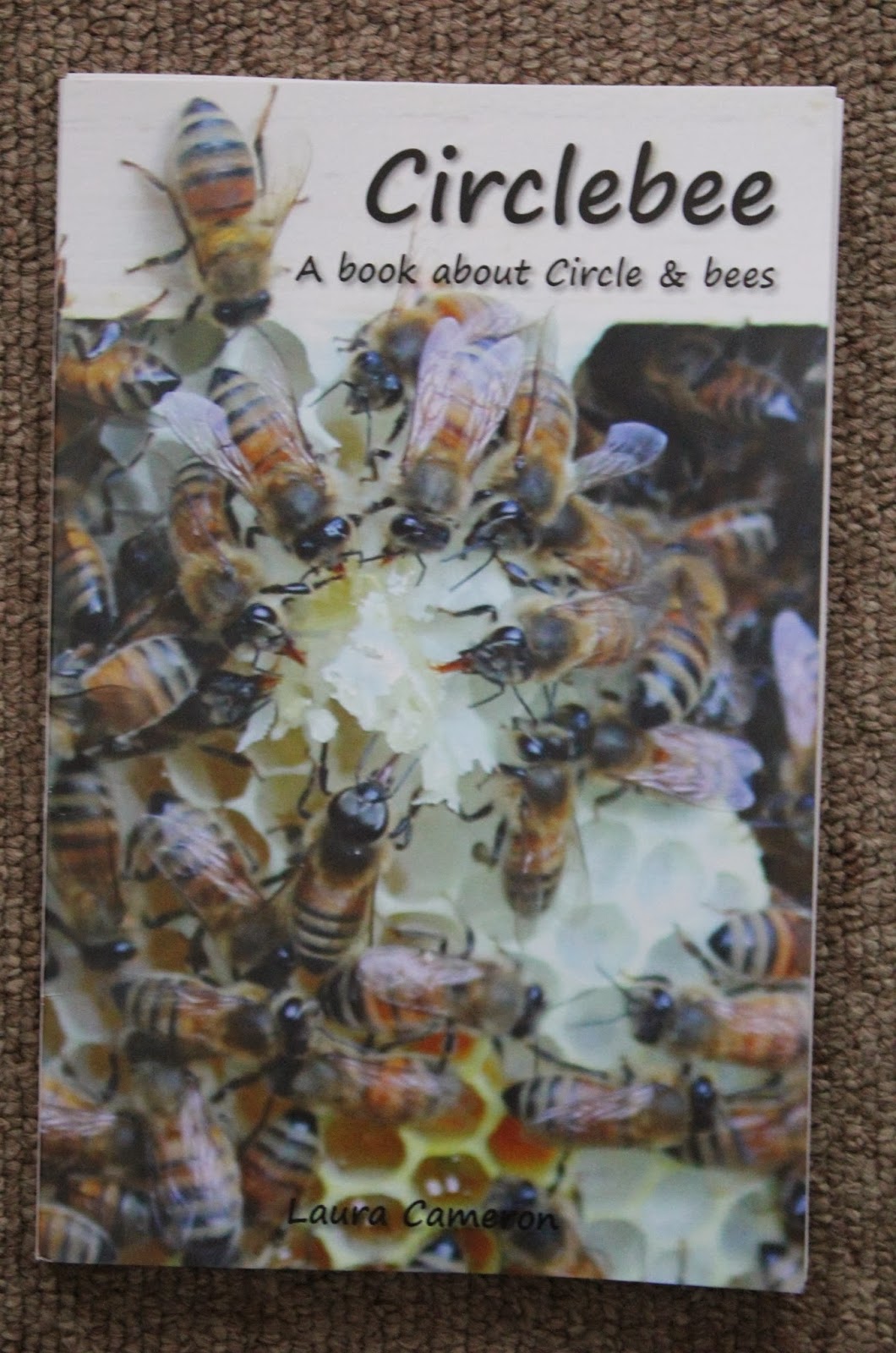
I'd like to introduce you to my first published book: Circlebee: A book about Circle & bees.

It's a short (150 pages), educational resource and guide for - how to keep Circle - as seen through the world of bees. Drawing from the wisdom of bees and beekeeping, I explain what is meant by the Circle process and describe how we can use it for empowering collaboration, and for creating healthy communities for all.  I also offer a new take on Circle and pioneer this message: Circle is environmental education in practice!!!

While ultimately this book is to further the knowledge and practice of Circle, it also brings to light the plight of the bees which serves as a mere paradigm for other environmental concerns we now face today. Circlebee offers a message of hope in a time of ecological crisis and uncertainty, and tells of a way to take better care of self & better care of others, so that together - we can take better care of the natural world starting with the tinniest bee.

Finally, if you are interested in Circle, beekeeping, or work in the field of community-building, the environment or education - this book is definitely for you!

I invite you to order a copy today - and enjoy this bee-autiful read! 
Visit my website for contact & order information: www.thebumblebeecircle.com

Stay tuned for more exciting events around the celebration of Circlebee in the New Year including a book launch party, bookstore readings, library visits and more.  It's going to bee awesome and I can't wait to fill you in!

Wednesday, May 29, 2013

Circle to Kick-Off the First Community Meeting

May 29th is National Day of the Honeybee!


Today I called the first Beekeepers meeting for folks that live in Chilliwack, Aggasiz-Harrison, & Hope. Being the very first time for people to meet others present - Circle practice was a great way to 'break the ice'. 

I used a hive tool as the talking piece for each person to introduce themselves, share what they love about bees & beekeeping, and talk a bit about what they are hoping to get from a beekeeping community, and what they bring to that community. The hive tool made the perfect talking piece - considering that it is the most held & used object in beekeeping practice - it received several chuckles in agreement.

There were three rounds of sharing:
1. Introduce self, hometown, style of beekeeping, and what you love about bees & beekeeping.
2. What do you hope to get from a beekeeping community, and what do your bring to it (e.g. skills/gifts)
3. Anything you would like to add? And being that it is National Honeybee Day - in celebration of the bees - and what they give to us (diversity & life), in what ways do you honor them, and give back to them.

So much was gleaned from these three rounds; and they served to set the group pace of sharing, and respectful listening & speaking. The conversation then flowed into connected, respectful, freestyle clusters.

What a great way to start a new community - by applying a community-building tool - right from the get-go!  I'm so happy this tool was well received. I wonder how many present were experiencing this process for the first time?


Friday, June 29, 2012

An Early Summer Update

I've been spotting bumblebees everywhere lately. They keep reminding me to keep up with my bumblebee circle work. While I've been neglecting my blog lately, I have been busy writing for other projects that I will some day soon share with you here. For now, please enjoy and BEE inspired by these bee-autiful bee moments I captured this month:


And of course, I invite you to share your bumblebee photographs, stories and love with me here :)


Monday, April 30, 2012

Earth Day Fun!

So happy to set up my first information booth at a community event @ Earth Day Chilliwack, April 21!


And a beautiful sunny day to bout!


Shared the space with my other home-business Garden Gabbers: www.gardengabbers.com 


My kids "Creation Station" was a hit!  Brought a couple craft items to make 'bumblebee hats'!


I loved seeing kids walking around wearing their cute little bee hats!


I facilitated some creative fun during the day too:  Interactive games & laughter yoga exercises!


A great day!

Monday, April 2, 2012

An Earth Hour Circle

(Picture: On my living room wall above where we held our circle.)

Held an Earth Hour Circle this past Saturday, March 31!  The opening of the Circle began at the start of Earth Hour (@8:30pm!) and closed ~10 minutes after its end (9:30pm). 

I put a plate of candles in the center of the group (4 of us) and one by one we lit the candles and opened the Circle with words of GRATITUDE. I started the rounds, lighting one candle saying, "I am grateful for..." and passed the lighter to my left. The next person spoke words of gratitude and lit a candle, and passed the lighter to his left. This continued around the circle until all the candles on the plate were lit. When the last round was complete, there was one extra candle - so we decide to put it in the center of the plate - for something that may come up later on in conversation. 

The intention of the Circle was to share our JOYFUL experiences of birth & death. The first question was something along the lines of, "What is it about birth and death experiences or cycles in your life right now that have brought a sense of joy to your life?"  Using the web Circle method (several talking pieces in the center) we took turns (in no particular order) selecting a talking piece that spoke to us, and sharing what that question meant to us. We started by sharing why we had selected that particular talking piece and the conversation went from their. Sharing around this question lasted about three rounds. I waited until I felt a sense of 'deflation' in group sharing and threw another spontaneous Circle into the center. At some point the candle in the middle was lit, in remembrance of all those that have passed before us (honoring death). The last question that surfaced during the Circle was, "What is your motto, inspiration... that you can/will lean on to empower you forwards to where you want to go (in regards to moving through the experiences of 'birth and death' that were shared)?  The last question seemed to help pull the emotionally-charged content shared with one another, into a more tangible sense of knowing and plan for the challenges lying ahead for us. We closed the Circle by blowing out the candles (one by one), by saying any last words or insights that had come to us. After the Circle, came an evening of celebration!

Three important elements about this Circle, and important to incorporate in all Circles was:

1. Opening a Circle with Gratitude
2. Tapping into the "Joy" of experiences (even the more painful ones like death). 
3. Bringing participants back into a place of empowerment (and wholeness) before the Circle closes.


Friday, March 16, 2012

Learning from Our Elders

“A healthy community is one that shares their stories” I heard someone say.  Several speakers joined together to have a conversation about the state and stewardship of Cultus Lake, a major water body in the community, that the First Nations also refer to as one of their mothers.  This event included a traditional First Nations meal of elk and fish, hosted in their community longhouse. The purpose of this meeting as communicated by the host was to:

“Come into our home, eat our food, listen to what the family has to say, witness it and share it with others”.  

I was touched by the First Nation’s spirit of generosity and welcome.  Even after years of conflict with ‘white people’ they ask us into their home and said, “We don’t talk about the past or how long it took us to get to this place, but we are here now, so welcome!”  I recognized that there was a sense of vulnerability simply by asking people to come into their home. This sense of ‘open vulnerability’ made the space feel more safe and helped me to listen more deeply to what was being said – as I also felt vulnerable being in their space experiencing a longhouse dinner tradition for the first time.

There were several things that stood out for me that made me think about Circle work:

The event was ‘opened’ with traditional songs that the host later described as the ‘heart’ of their community. Even the woman next to me whispered, “Did you hear how the welcome song was to the rhythm of a heart beat?”  (Circle is all about heart).

Witnesses were called to take special care and attention to what was being said. I was told that the witnesses were given a gift (tokens) which connects and commits them to this role. (We are called to be witnesses in Circle).

Those hosting the conversation (opening speakers) wore a blanket across their heart. I am unsure as to why this tradition is practiced when speaking, although I am certain there is some significance here. (There is a relationship between the heart and speaking in Circle).

The longhouse consisted of a large dirt floor, surrounded by benches along the walls, making one giant circle. The crowd sat around the circumference. (We sit in a circle, when experiencing Circle).

It was communicated that, “We gather to hear real voices from a real floor (dirt), because this is how we have real conversations (versus the world of texting we live in)”.   (Circle is about getting back to ‘real’ conversations – effective listening and speaking).

* * * *  

The experience overall reminded that “A sense of community is found only through giving.”  Then I had an epiphany:  If story-telling is a kind of giving of our stories and selves, than it absolutely makes sense that healthy communities involve sharing our stories!!!  

Monday, February 20, 2012

The Value of Circle is in the Experience

I had a dream last night about creating a mural with a group of people. Everyone was committed to the project, pouring their hearts into the colorful masterpiece. When the mural was completed, it was painted over with white-wash, as if it had never been created. "What was the point in creating such a beautiful masterpiece accomplished by many, if only to destroy it?" one person asked. The group facilitator responded by saying, "It isn't the finished product we focus on, rather it's being a part of the process that we need to learn from". This dream made me think instantly about Circle.


We tend to look for 'measures of success', reasons to be involved, or the value in doing something before committing time and energy in the first place... A "What's in it for me?" mentality in a manner of speaking. Circle, however, is not about expecting an outcome. There is no finish line or destination that you will arrive at, no completed 'masterpiece' to be attained. Rather, the value of Circle is understood only by 'being in the process' and what takes place in that 'doing space' within ourselves (e.g. self-realization) and between others present (e.g. a group synergy) when we open our 'hearts' to what is taking place. As a friend of mine once told me, "I could describe it to someone until I am blue in the face, but they won't get it until they just do it!"


While there is much I value about experiencing Circle, the mural metaphor in my dream reminded me of something I value in particular about the process: It empowers me to be in such a way that is 'heart-led'.  It is the heart that leads my person when I create (draw, paint, etc.), it is the same for me in Circle. I would like to say that my heart steers my person 24/7, but I know my head or ego or other takes over from time to time. How might I live a life that is more heart-led?  Just like the heart muscle itself needs physical exercise for health and well-being, being heart-led requires that I exercise this way of being to have it grow within my life. I can do so in Circle.  I've also noticed that my heart starts to 'ache' when days go by and by and by without Circle, just like my bones and muscles start to ache when I don't do my yoga or get out for my walks (physical exercise) on a consistent basis. Time to exercise!


Thursday, January 5, 2012

The Etiquette of Potluck

I came across an interesting metaphor when reading "The World Cafe" today regarding the role of 'contribution' in group settings. The author reflecting on p.100 talks about how they began to think of Cafe conversations as being similar to potluck dinners, how each person contributes a unique dish is what makes a potluck so interesting, fun and nourishing. I started to think more about the essence of potlucks and how this could be used as a metaphor for how to understand & empower healthy group etiquette.

A potluck is a group gathering where each person attending brings a food item for the nourishment and enjoyment of others present. It is a community affair where celebration and connection is valued.

We trust that those bringing their contributions do so with love and care (no inedible ingredients to make others unwell).
We don’t question others cooking skills or require a detailed list of ingredients or the cooking instructions that went with their contribution.
We don’t criticize their dish and tell them how we would have rather made it.
We have the option to try a variety of dishes, no one is forced to eat anything they don’t like, are allergic to, etc.
We take responsibility for our own contribution and don’t expect others to cook for us or clean up after us.
If we require help, we ask for it. If we are unable to contribute, we communicate this.
What we bring to the table is for sharing.
Those invited are under no obligation to attend. 
There is an overriding presence of gratitude involved with a potluck - we are thankful for the presence of and contributions of others.

One group etiquette that has been on my mind for some time has been the idea of holding each other able.  I believe this is essential for individuals to be passionate about and empowered to contribute as well as for groups to sustain a cooperative working environment, more than ever within organizations that count on individual contribution as an essential aspect of the group's function or success. So how might we hold each other able in a group/organization setting? Perhaps this means that we agree to:

*Have confidence in each other’s talents, skills and leadership.
*Empower and support each other to carry out their roles & ideas
*Trust that individuals embody the group’s vision and objectives and carry out all undertakings accordingly.
*Value everyone’s contribution to the collective group and encourage creativity, diversity and entrepreneurship within the collective.

What do you do to empower this etiquette among others within your group?


Thursday, December 29, 2011

Creative Circles

I have found that creating Mandalas is complimentary to Circle work, in the way the creative process helps one to listen more deeply to one's self and become more 'open-hearted' to what surfaces from the heart. In Circle, we are asked to 'speak from the heart' about what matters most to us, yet in order to do so, we must first know what this means and how put 'heart speak' into practice. It is possible that creating Mandalas can help to teach us this.

While undertaking my master thesis, I created Mandalas – as another means of personal journaling and reflection to deepen the learning process and to empower a richer personal understanding of Circle and its significance for Environmental Education. I would begin each (thesis) work week with “Mandala Mondays” and go from there. Each Mandala would draw out a theme or concept of Circle which I would then spend time writing about that week. I used a variety of mediums (paints, crayons, cloth material, pens, etc.) to make my sacred creations. For example, this Mandala entitled “My Ecological Identity” (below) was a reflection on perceiving the Earth and all life forms as an extension of self.


I challenge anyone and everyone interested in enriching their experience of Circle to create a Mandala or two… and/or take up my Mandala Monday Challenge – a commitment to begin each week with a Mandala creation to open up more fully to what your heart is saying, and trusting in this message to be the very thing you need to enrich your soulful learning direction in the week ahead.

Here’s how to participate:

1.      Create a ‘contained space’ in which you will communicate from the heart through creative artwork.  Find a piece of paper or another kind of blank canvass - on which you will draw, trace or cut out a Circle - in which you will create your Mandala masterpiece.
2.      Choose your medium of choice. It doesn’t matter what you use to draw/paint with – go with whatever you feel like – this may change from creation to creation. Mix it up. Be color coordinator or chaotic – use one or a variety of mediums - it doesn’t matter.
3.      Let whatever surfaces manifest in art form. When you speak from the heart you are not thinking from the head – nor should you critic or judge what you are creating – it is what it is. Go with the flow, trust in what surfaces, allow it to manifest in creative form, don’t judge the finished product.
4.     Learn from the process. Learning is not so much from creating a finished product, rather it is in the process of creating itself, the thoughts and feelings that move through you as you create. Also, you may have no idea what it is your heart is saying until you reflect more deeply on the process, and on what you created.
5.  Believe that Mandalas are all about heart.  Some people think that Mandalas should be symmetrical in design, with repeated shapes & colors throughout the circumference of the art form to be considered a Mandala. This is not true, although there are many beautiful Mandalas that are like this.  If you open up to what your heart is saying and allow whatever shape, design, color that manifest within the circle canvass space - this is what creating a Mandala is all about. Creating Mandalas are about moving out of the head and into 'heart' space - a meaningful meditative creative expression of sorts.
6.  Enjoy the creative process. It is far easier to get the creative juices flowing, to undertake a creative task, etc. when one is "in joy" ("enjoy"), that is, when you engage in what it is you do from a place of joy and gratitude. Creativity and joy flow from the same place - the heart.
7. Reflect on the process. Opportunity to gain more insight and learning can be found when you take time to reflect more deeply on your work through creative writing (journal, freestyle, poems, etc.). Start with giving your Mandala a "title" and go from there.


Facilitating Circle by Ear


I play piano by ear and sing harmony to almost every musical piece and anyone singing, so Stefon Harris' TED talk presentation really struck a chord with me and revealed how to best facilitate (and participate in) Circle. In fact, I didn't really think about the relevance of what it is I do when playing the piano by ear or harmonizing to music - until seeing this video. Now I understand more deeply how facilitating Circle alike 'playing by ear' is about listening deeply, paying attention to the subtleties going on, and creatively guiding what is taking place into something harmonious and/or desirable. It is also about trusting the process, opening oneself up to what the heart is communicating, and making space for creativity:

When I sit down to play the piano, I never know what it is I will be playing or what direction (tone palette) my fingers will take me, or the emotions that will lead them - I just sit down and channel a direct link from my heart to my fingers and go with it. I play until my soul is satisfied with what has been communicated, and I find this experience often healing, cathartic, and energizing. It is the process of 'creating' that I am referring to, rather than the actual musical score that manifests. In fact, I can often be self-critical of my musical creations, after all I am no Mozart. So I appreciate Stephon Harris' message that 'there are no mistakes on the bandstand', meaning there are no mistakes while creating music, only opportunities. Opportunity to create something meaningful from a diversity of tones and silent spaces between these tones, whatever musical composition or sound manifests. 

When a musical group works together, there is something musically delicious hearing a melody paired with perfect harmony. I more often than not choose to harmonize with others when singing together rather than taking the lead with the melody. This requires 'having an ear for it', listening deeply to the notes that others are voicing and singing a complimentary tone palette. Believe it or not, this also requires TEAMWORK. It can be tough and almost impossible to harmonize with one leading the melody if he/she goes all over the place with no mindfulness for harmony. Also, in my experience working with other singers, I find it most enjoyable when the role of 'center stage' rotates: one person takes the lead vocals and switches off to the next person, and so on - so each person can share their authentic singing voice, and each person alternatively takes turns listening more attentively. When jamming with other musicians (singing or playing instruments), no one likes a stage hog -  everyone brings something to the musical experience.  There needs to be room for each person to have a 'play' ('say') when jamming together. In fact, each person (and instrument), adds something unique/different to musical composition which manifests, that would be different otherwise if that person/instrument was not participating. Imagine how music changes when you add or take away a tuba, a clarinet, drums, violins, etc.  A desirable musical composition is diverse and creative in: what sounds (voices) are drawn out and how often; how these sounds (voices) blend with other sounds (voices) or stand alone; the timing of sound (voice) and the spaces of silence in between; and having an 'ear' for this all, to make a musical score manifest.

Understanding Circle facilitation/participation alike musical creation has given me much to meditate on. I find a sense of peace and comfort knowing I can lean on my experiences of playing the piano and singing harmony to help edify my skills as a Circle facilitator. That being said, I think I'm going to go and play the piano now...I have a craving for creativity and Circle tonight.